
The quote you shared appears to be a passionate postgame rant from a college football head coach, delivered in the heat of frustration after a game marred by what he perceived as a blatant, intentional dirty hit.
The speaker refuses to name the player directly but makes it clear the entire room knows exactly who he’s referring to. The target is accused of deliberately targeting an opponent rather than playing the ball, followed by taunting behavior like words and smirks that underscored malice.
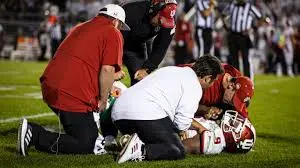
This kind of outburst highlights deep-seated anger over player safety and inconsistent officiating.
The coach insists the contact crossed into targeting territory—going for the man instead of the ball—and calls it intentional with “no doubt about it.” He points to the aftermath as proof: the alleged offender’s attitude revealed the intent, turning a football play into something dangerous and unsportsmanlike.
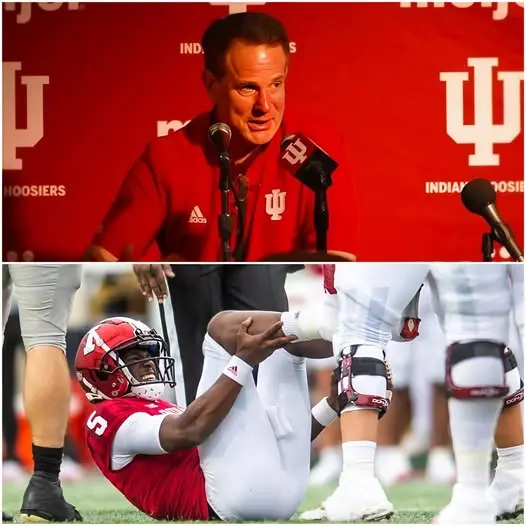
The rant escalates into a broader indictment of the NCAA. The coach accuses the governing body of maintaining “invisible lines” and offering only “soft criticisms” while protecting certain teams or programs.
He questions the organization’s commitment to fairness and integrity, suggesting officials routinely turn a blind eye to “dirty hits” disguised as accidental contact.
In his view, the NCAA’s so-called standards are a facade. Day after day, questionable calls go unpunished, allowing dangerous play to persist. The coach refuses to stand idly by while his team suffers from rules that aren’t enforced equally or rigorously enough.
He demands accountability, framing the issue as a systemic failure that endangers players and undermines the sport’s credibility.
Such tirades are rare but powerful in college football. They often come after high-stakes games where emotions run high and perceived injustices linger. Coaches use these moments to rally their programs, protect their athletes, and pressure the league for change.
This one stands out for its raw emotion and refusal to mince words, even while avoiding direct naming—likely to sidestep immediate fines or further escalation.
The emphasis on “intentional” hits touches on a ongoing debate in the sport. Targeting rules exist to deter helmet-to-helmet contact and other dangerous actions, but enforcement remains inconsistent. Reviews sometimes miss context, and ejections or suspensions feel arbitrary to many observers.
When a coach publicly calls out what he sees as blatant disregard, it amplifies calls for reform.
The reference to “protections for certain teams” hints at perceived bias—whether toward power conferences, traditional blue-bloods, or programs with strong influence. This fuels longstanding complaints about uneven officiating and disciplinary outcomes. Smaller or rising programs often feel disadvantaged when big names escape severe punishment for similar infractions.
The coach’s closing line is a direct challenge: if the NCAA won’t enforce its own rules consistently, it has failed everyone involved. He positions himself as a defender of his players and the game’s integrity, unwilling to accept the status quo.
This stance resonates with many in the college football community who share frustrations over player safety, rule application, and accountability.
In the aftermath of such a rant, reactions typically split along familiar lines. Supporters praise the coach for speaking truth to power and advocating for his team. Critics might accuse him of sour grapes, especially if his team lost or struggled in the game.
Media coverage explodes, with clips circulating widely and sparking debates on podcasts, shows, and social platforms.
Ultimately, these moments rarely lead to immediate change from the NCAA, but they keep the conversation alive. Player safety remains a priority in theory, yet enforcement gaps persist. Coaches who go public force scrutiny, even if it risks backlash or fines.
This particular statement captures the raw intensity of college football’s high-pressure environment. It reflects a coach pushed to his limit, unwilling to let an alleged dirty play slide without calling it out.
Whether it leads to investigations, ejections, or rule tweaks remains to be seen, but it undeniably puts the spotlight on the issues plaguing the sport.
The words serve as both defense of his player and indictment of a system he believes has let everyone down. In a sport built on passion and physicality, lines between hard-nosed play and dangerous intent blur too often.
When a coach declares “no doubt about it,” it demands attention—and hopefully, action—from those in charge.
College football thrives on drama, rivalries, and emotional highs and lows. Rants like this add fuel to the fire, reminding fans why the game captivates millions. They expose vulnerabilities in the structure while showcasing the fierce loyalty coaches have for their teams.
In the end, the message is clear: protect the players, enforce the rules fairly, or risk losing credibility altogether.
College football thrives on drama, rivalries, and emotional highs and lows. Rants like this add fuel to the fire, reminding fans why the game captivates millions. They expose vulnerabilities in the structure while showcasing the fierce loyalty coaches have for their teams.
In the end, the message is clear: protect the players, enforce the rules fairly, or risk losing credibility altogether.