
“To be completely honest, Green Bay was the superior football team tonight — in every measurable way,” Stephen A. Smith snarled, tearing into the broadcast with open contempt. “But none of it mattered, because the officiating crew practically carried them on their backs all night long.
Those phantom calls, those fabricated flags, those momentum-killing whistles — the Bears didn’t get beaten by execution; they got robbed by officiating. Let’s stop pretending this Packers win was earned. It was handed to them.” The moment was already volatile — until Dan Orlovsky struck back.
Orlovsky — an American football analyst for ESPN and a former professional quarterback known for his usually composed, analytical demeanor — unleashed a level of venom that stunned even the control room. He leaned forward, eyes burning, voice slicing through the studio like a blade.
“That’s delusional, Stephen — absolutely delusional. Chicago didn’t get sabotaged. Chicago got manhandled. End of story. Blaming refs doesn’t magically turn a collapse into toughness.” Then came the line that shattered the segment: “Stop whining just because Green Bay outclassed them.” Silence followed — heavy, electric, suffocating.
Even through the cameras, the tension felt like it could snap the desk in half. The studio froze, the production team held their breath, and millions watching at home leaned closer to their screens. Then, as if on cue, the internet erupted. Within seconds, social media detonated.
Clips were reposted at lightning speed, arguments flooded timelines, and hashtags tied to the segment exploded across every platform.
What began as routine postgame coverage morphed into a full-blown televised clash — two dominant voices slamming into each other with zero restraint and absolutely no intention of backing down..The postgame broadcast was already simmering when Stephen A.
Smith leaned forward in his chair, eyes narrowed, voice sharpened with unmistakable contempt. What was supposed to be routine analysis quickly transformed into accusation, his words cutting through the studio with a fury that signaled something far deeper than disagreement.
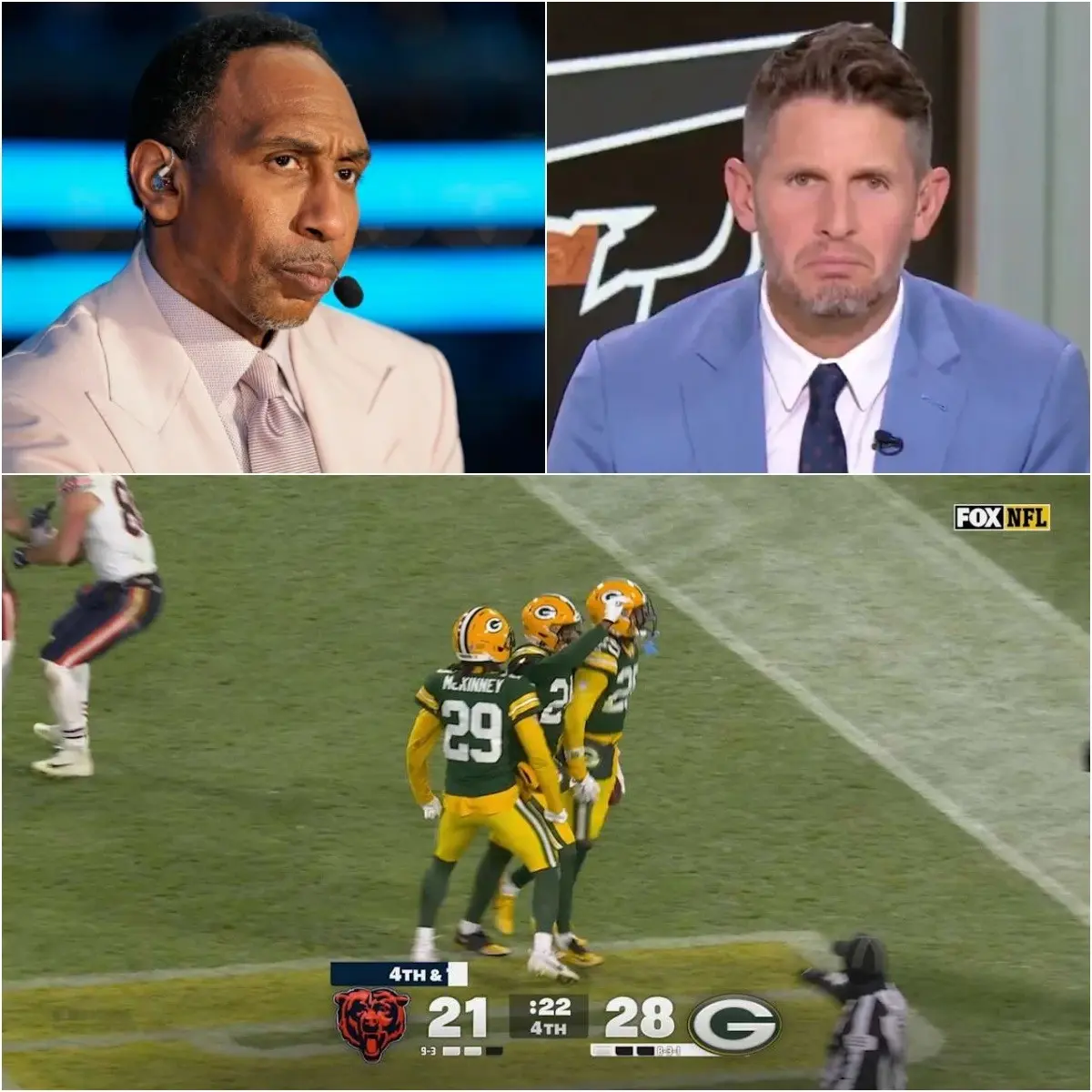
Smith did not hedge. He declared Green Bay the superior team in measurable categories, then dismissed every advantage with a sweeping indictment of officiating. According to him, phantom calls and momentum-killing whistles dictated the night, turning competition into theater and stripping the outcome of legitimacy.
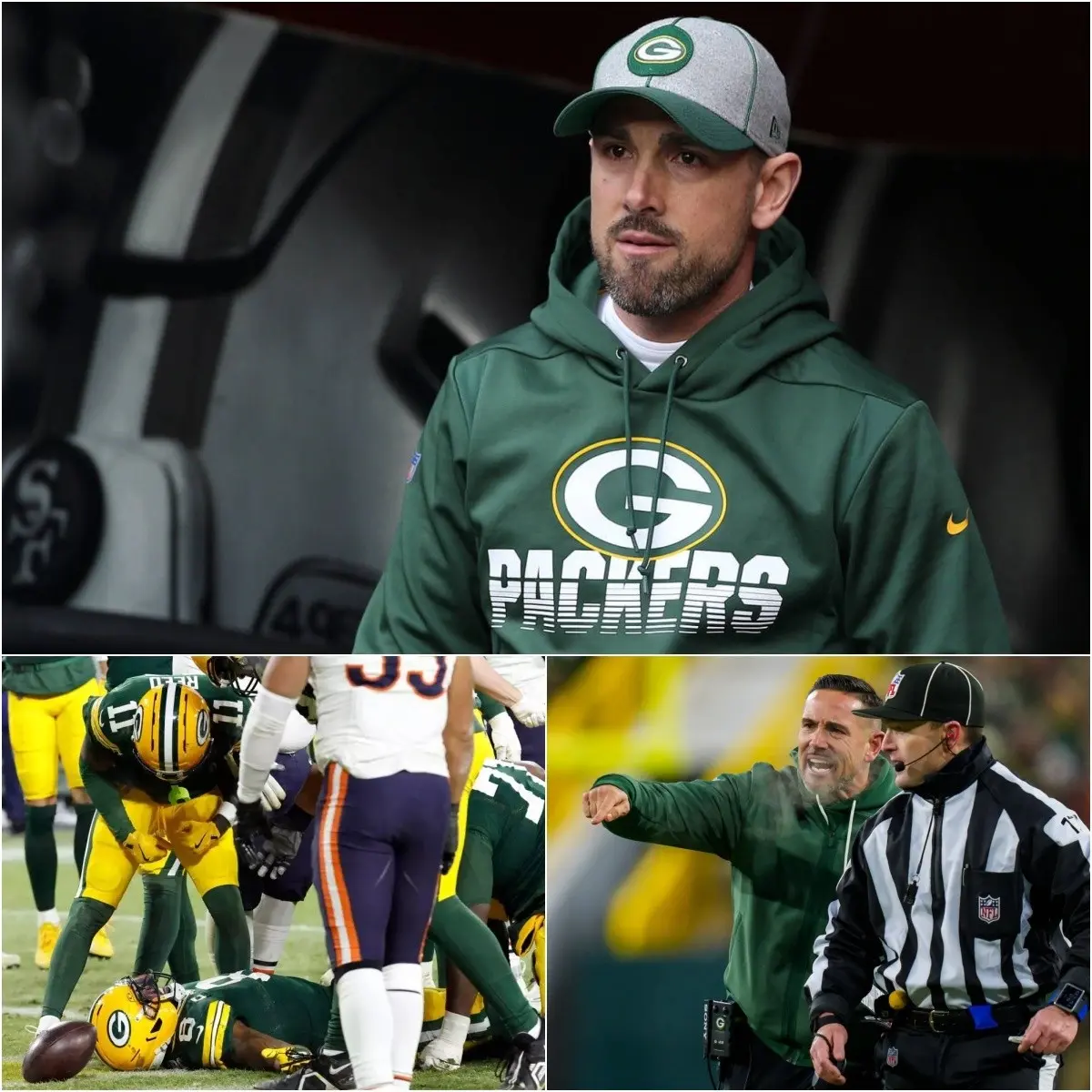
The force of his delivery left no room for ambiguity. This was not critique; it was condemnation. Smith framed the Bears not as outplayed, but as victims, robbed in plain sight while the league’s officials allegedly carried the Packers through crucial moments.
The studio atmosphere thickened. Producers glanced nervously at monitors, sensing the segment slipping beyond scripted boundaries. Viewers at home felt the temperature rise, knowing from experience that when Smith goes this far, someone is bound to respond.
That response came swiftly, and unexpectedly. Dan Orlovsky, typically composed and methodical, shifted forward. The change in posture alone signaled rupture. His eyes locked on Smith, and when he spoke, the tone was not analytical—it was confrontational.
Orlovsky rejected the premise outright. Chicago, he said, was not sabotaged. Chicago was dominated. He stripped away the officiating narrative with blunt force, insisting that blaming referees only masked a collapse rooted in execution, preparation, and physical mismatch.
The control room stiffened as Orlovsky’s voice rose. This was not a counterpoint; it was a challenge. Each word landed with surgical precision, dismantling Smith’s argument piece by piece, leaving no space for polite rebuttal.
Then came the sentence that detonated the segment. Orlovsky accused Smith of whining, of refusing to acknowledge superiority when it stared him in the face. The remark was sharp, personal, and unmistakably final.
Silence followed, thick and electric. The kind of pause that only happens when television veers off its rails. Smith stared back, lips pressed tight. The desk became a battleground frozen in time.
For several seconds, no one spoke. Cameras held. Graphics stalled. Millions of viewers leaned closer, sensing history being made not on the field, but under studio lights.
Then the internet did what it always does. Clips were ripped, reposted, looped. Quotes exploded across timelines. Hashtags trended within minutes, each side claiming victory in a debate that now belonged to the public.
Fans fractured instantly. Bears supporters amplified Smith’s words, calling the exchange overdue honesty. Packers fans rallied behind Orlovsky, praising him for saying what they believed analysts were afraid to admit.
Former players chimed in, some siding with execution over excuses, others warning that officiating inconsistencies do shape games. The debate expanded, morphing into a referendum on accountability, bias, and the culture of modern sports media.
ESPN executives watched closely. Moments like this drive ratings, but they also test boundaries. Passion sells, but personal lines blur quickly when voices collide without restraint.
Smith eventually responded, defending his stance with equal intensity, framing Orlovsky’s comments as dismissive of systemic issues fans have complained about for years. The clash evolved from game analysis into philosophical divide.
At its core, the argument was never just about one game. It was about how narratives are built, who controls them, and whether accountability lies with players, officials, or those interpreting events for millions.
The Packers’ win faded into background noise as the broadcast became the story. The scoreboard mattered less than the spectacle of two dominant personalities refusing to yield ground.
In sports media, moments like this are rare and dangerous. They electrify audiences while exposing fault lines between commentary and confrontation, between debate and spectacle.
By morning, the segment had been dissected frame by frame. Tone, posture, pauses—everything analyzed. Not just what was said, but how it was said, and why it resonated so deeply.
The game would be remembered, but the clash would be replayed longer. A reminder that in today’s sports landscape, battles don’t end at the final whistle—they just change arenas.
And somewhere between accusation and rebuttal, between outrage and defiance, millions were reminded why they keep watching: not just for the games, but for the collisions of ego, belief, and unfiltered truth that follow.