
“Let me be clear — I’ve coached and lived this game long enough to recognize every tactic a team can pull, but I have never witnessed anything as reckless, as blatant, or as nationally humiliating as what unfolded today on an NFL field.
When a player goes after the football, you see purpose. But when he abandons the play entirely and hurls himself at another man out of pure frustration? That’s not instinct — that’s a choice. A dirty, intentional choice.
And the smirking, the taunting, the chest-thumping afterward made it crystal clear what their mindset was.” “I’m not naming names — everyone watching already knows.
But to the NFL officiating crew and the league office reviewing this: the late whistles, the swallowed flags, the ghost penalties, the tolerance for reckless, undisciplined hits — every fan caught it in real time. You preach integrity. You preach player safety.
Yet you hide behind the lazy excuse of ‘just physical football’ to cover up hits that violate every standard this league pretends to uphold.” “Today, the Green Bay Packers beat the Chicago Bears 28–21, and I’m proud of my players for keeping their heads when chaos was practically being officiated into existence.
But don’t get confused — this win doesn’t erase the officiating failures, and it sure as hell doesn’t erase the pattern of negligence that’s been allowed to fester week after week.” “The players deserve better. The fans deserve better.
And the NFL needs to decide whether it stands for competition — or for chaos disguised as football.” The locker room corridors were still humming when the head coach stepped before the microphones, his voice already carrying the weight of something heavier than a final score.
What followed was not a routine postgame explanation, but a controlled eruption shaped by years inside a league he claimed was failing itself.
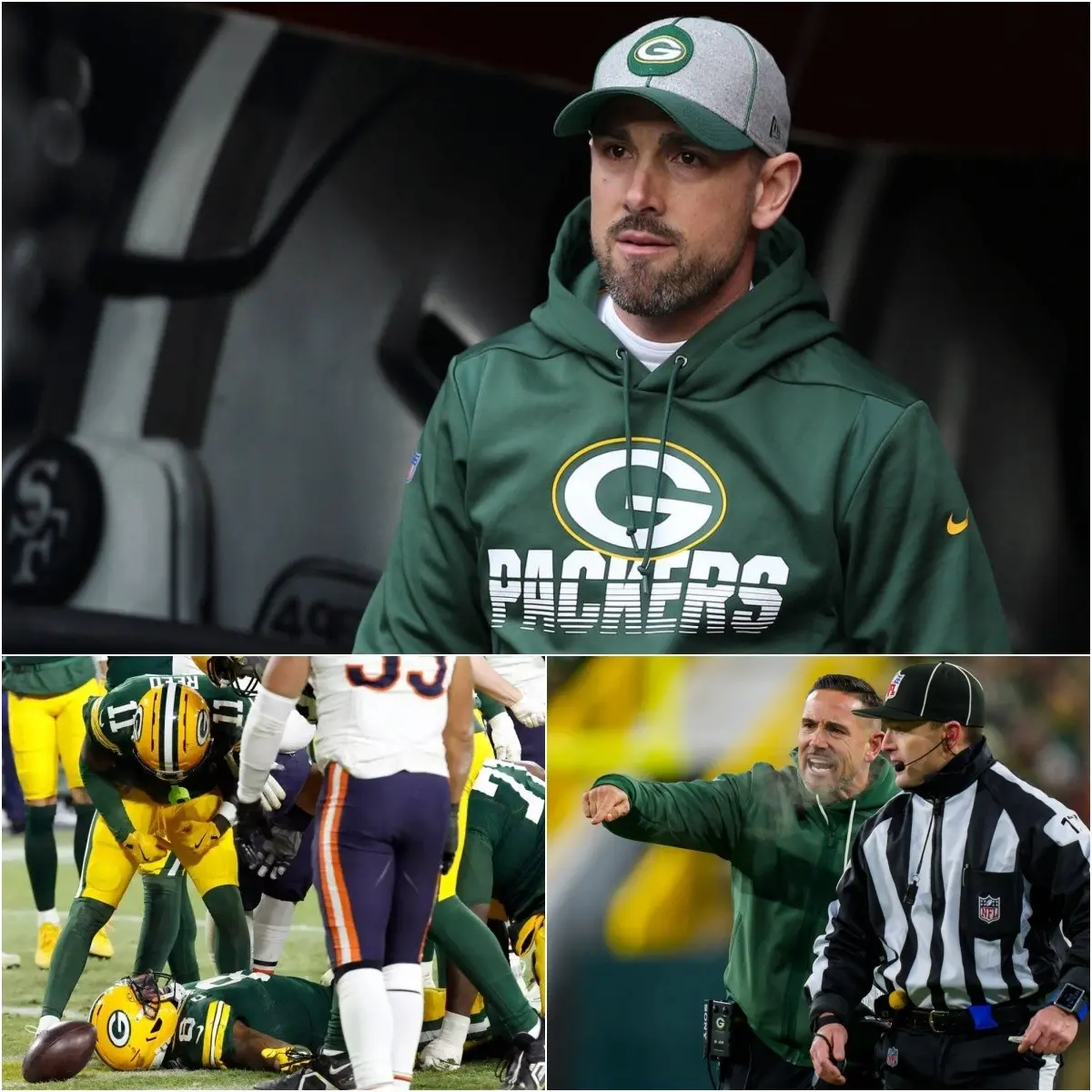
He spoke slowly at first, choosing words with the precision of someone who knew exactly how far each sentence would travel. He framed his authority through experience, reminding everyone he had lived the game long enough to recognize tactics, trends, and tricks that often slipped past casual observers.
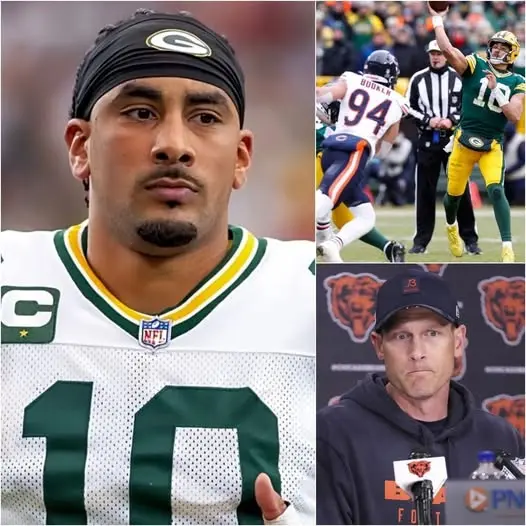
Then his tone sharpened. What unfolded on the field, he said, was not competitive aggression but reckless intent. He drew a stark line between pursuing the football and abandoning the play entirely, arguing that the moment frustration replaces purpose, the act ceases to be football.
The room stiffened as he described the hit. He did not dramatize the collision itself, but the mindset behind it. To him, the body language afterward mattered most. The smirking, the taunting, the celebration, all pointed toward intention rather than accident.
He refused to name the player involved, insisting that anyone watching already knew. That omission only intensified the moment, turning silence into accusation. Cameras flashed as reporters glanced at one another, understanding exactly who he meant without a single name spoken aloud.
His criticism then widened beyond the field. The officiating, he argued, had created an environment where recklessness could thrive. Late whistles, swallowed flags, and inconsistent calls were not mistakes in isolation, but symptoms of a deeper tolerance that endangered players.
The league’s language about integrity and safety became his next target. He accused the NFL of hiding behind the phrase “just physical football” whenever accountability became inconvenient. In doing so, he suggested, the league undermined its own standards and credibility.
Fans, he said, were not blind. Millions watching in real time had seen the same missed calls and questionable non-calls. Social media, he noted, reacted instantly, not with confusion but with recognition. The outrage, in his view, was earned.
Despite the frustration, he made sure to acknowledge the scoreboard. The Green Bay Packers had beaten the Chicago Bears 28–21, and he expressed pride in his players for maintaining composure amid what he described as officiated chaos.
That pride, however, came with a warning. A win did not erase systemic problems. Victories could not be allowed to distract from patterns that repeated week after week. Success, he argued, should not require silence in the face of negligence.
The press conference shifted from a game recap into a broader indictment of league governance. He framed the issue as cultural, not incidental, suggesting that tolerance for dangerous play begins at the top and trickles downward through officiating standards.
Players, he emphasized, were paying the price. Careers are short, bodies fragile, and trust in the system essential. When enforcement becomes inconsistent, athletes are forced to protect themselves in ways that can escalate conflict rather than prevent it.
Fans were not spared from his concern. He described them as stakeholders whose loyalty deserved honesty. Football, he said, should inspire passion, not suspicion. When officiating becomes a storyline, the product itself suffers.
Around the league, analysts immediately dissected his words. Some praised the restraint and clarity of his argument, noting how carefully he avoided personal attacks while still delivering a blistering critique of league operations.
Others accused him of deflection, arguing that physicality has always defined rivalry games and that emotion can distort perception after intense losses. The debate quickly polarized, mirroring the broader tension between tradition and evolving safety standards.
Former players weighed in, many echoing his concerns. They spoke about how small lapses in officiating can normalize dangerous behavior, changing the tone of a game within minutes and leaving players unsure where the line truly exists.
League officials released a brief statement later that evening, acknowledging the concerns without addressing specifics. The vagueness only fueled further discussion, as fans interpreted the response as cautious bureaucracy rather than meaningful engagement.
By the following morning, clips of the press conference dominated sports media. The coach’s words were replayed, quoted, and debated, transforming a single hit into a referendum on what the NFL chooses to tolerate.
Inside both locker rooms, players moved on to recovery and film study, but the narrative lingered. Games end, but questions about safety, integrity, and accountability do not disappear with the final whistle.
In the end, the speech resonated because it challenged the league to choose its identity. Whether the NFL stands for disciplined competition or chaos masquerading as toughness is a decision that echoes far beyond one game, one hit, or one bitter rivalry.