
After Indiana’s staggering 56-22 demolition of Oregon in the College Football Playoff Peach Bowl semifinal on January 9, 2026, the game itself was a historic blowout. The Hoosiers overwhelmed the Ducks from the opening snap, intercepting Dante Moore on the first play for a pick-six and never looking back.
Indiana racked up 612 total yards, with Heisman contender Fernando Mendoza throwing for 177 yards and five touchdowns on 17-of-20 passing. The defense forced multiple turnovers, sacked Moore repeatedly, and held Oregon to just one meaningful touchdown before garbage time.
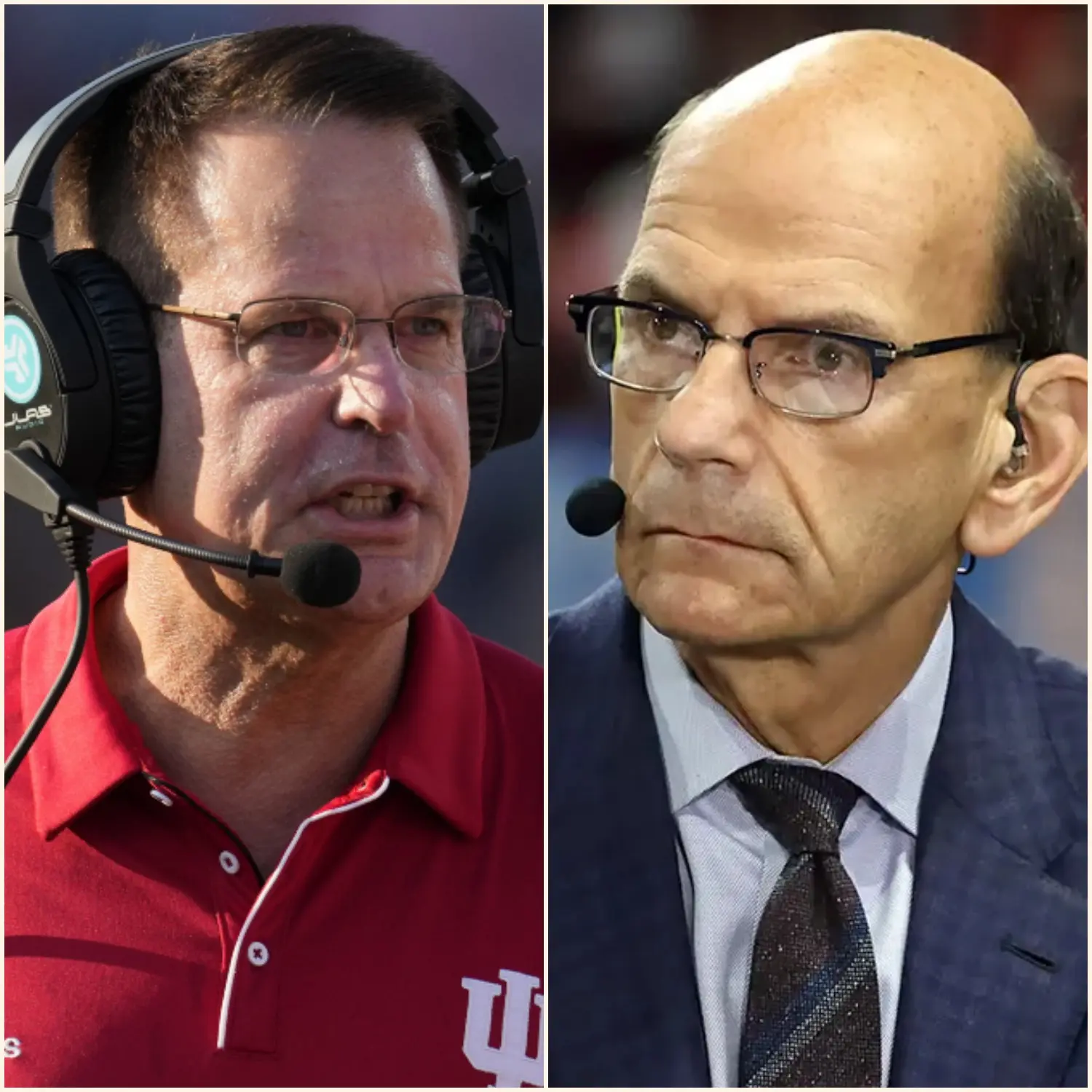
Yet the biggest hit of the night came not from the field, but from ESPN analyst Paul Finebaum during his post-game segment. The SEC Network staple opened with a cold, calculated shot that immediately went viral: “Let’s get something straight — that win wasn’t earned. It was purchased.”
Finebaum doubled down as his voice rose on live television, accusing Indiana of bypassing traditional program-building through sheer financial power. “You don’t beat a program like Oregon with development or toughness anymore — you beat them with NIL money. Indiana bought that win. Bought the roster. Bought the depth.
And frankly, they got the benefit of a system that’s completely broken.”
He pushed further, questioning how a team like Oregon—built on speed, culture, and execution—could be run off the field so decisively. “They tried to play football.
Indiana played with a checkbook.” Then came the line that exploded across social media: “The NIL imbalance is embarrassing — and the entire country saw it tonight.”
Finebaum’s tirade framed Indiana’s rapid rise—from perennial underachiever to CFP No. 1 seed—as artificial, crediting aggressive NIL collectives that reportedly raised over $40 million in 2025.
He implied the Hoosiers’ roster overhaul via the transfer portal and high-profile commitments was less about coaching or grit and more about outspending everyone else.
The comments sparked immediate firestorm. Indiana fans flooded platforms with game highlights, defensive stops, and Mendoza’s precision, insisting the victory was earned through execution and preparation.
Oregon supporters were split: some echoed Finebaum’s concerns about NIL tilting the scales, while others blamed their own team’s uncharacteristic mistakes—four turnovers, poor tackling, and failure to adjust.
Minutes after Finebaum’s segment wrapped, Indiana head coach Curt Cignetti stepped to the podium for his post-game press conference. Facing a barrage of questions about the analyst’s accusations, Cignetti remained composed, his trademark intensity simmering beneath a calm exterior.
When pressed directly on Finebaum’s claims of a “purchased” win and a broken NIL system, Cignetti paused briefly, looked straight into the cameras, and delivered one icy, lethal sentence—exactly 11 words: “We built this with hard work, not excuses. Deal with it.”
The line landed like a knockout punch. The room fell silent for a beat before murmurs erupted. Social media ignited anew, with clips of Cignetti’s deadpan delivery racking up millions of views within hours.
Supporters hailed it as a masterclass in shutting down noise—direct, unapologetic, and focused on his team’s merit rather than engaging in debate.
Cignetti’s response aligned perfectly with his philosophy throughout the season. He had repeatedly emphasized preparation, culture, and next-man-up mentality. In earlier pressers, he deflected external narratives, preferring to let results speak.
This time, the 11-word mic drop reinforced that stance: Indiana earned every yard, every stop, every point through execution, not handouts.
The exchange highlighted the ongoing NIL debate gripping college football. Indiana’s rapid transformation—undefeated 15-0 entering the title game—fueled skepticism from traditionalists who viewed it as emblematic of money overpowering organic growth. Finebaum, a vocal critic of NIL’s impact on competitive balance, used the blowout as Exhibit A.
Yet the Hoosiers’ on-field dominance was undeniable. They scored on seven straight possessions early, blocked a punt, forced fumbles, and limited Oregon to 198 yards through three quarters. Players like Mendoza, Jaiden Hunter, and D’Angelo Ponds executed at an elite level, proving preparation and talent could still triumph.
Cignetti’s retort shifted the conversation from defense to defiance. It galvanized Indiana’s locker room and fanbase, turning criticism into fuel ahead of the national championship against Miami on January 19.
Finebaum’s rant may have aimed to diminish the achievement, but the coach’s 11 words ensured the focus stayed on what mattered: the scoreboard and the journey.
In an era where NIL dominates headlines, Cignetti reminded everyone that championships are won on the field, not in bank accounts. His icy dismissal cut through the noise, leaving Finebaum’s tirade looking more like sour grapes than analysis.
The Hoosiers now stand one win from immortality. Whether they silence the doubters for good or fuel more debate depends on Monday night in Miami. But after Cignetti’s lethal response, one thing is clear: Indiana isn’t buying wins—they’re earning them, and they’re not apologizing for it.
The playoff run has already rewritten program history. From 3-9 just years ago to dismantling Oregon and Alabama en route to the title game, the Hoosiers have defied expectations. Finebaum’s words may sting, but they pale against the reality of 56-22 dominance.
As social media continues buzzing with memes, clips, and debates, Cignetti’s 11-word closer stands as the night’s true defining moment. In college football’s evolving landscape, sometimes the sharpest hit comes from a podium, not a tackle.