
Paul Finebaum unleashed a scorching post-game rant on ESPN following Indiana’s stunning 56-22 rout of Oregon in the College Football Playoff quarterfinal on January 10, 2026. The Hoosiers delivered one of the most dominant performances in recent playoff history, but Finebaum refused to give them credit.
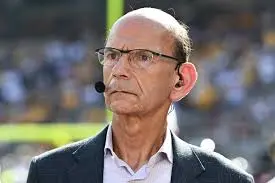
Instead, the longtime SEC Network analyst opened his segment with a brutal, calculated jab that immediately went viral. “Let’s get something straight — that win wasn’t earned. It was purchased,” he declared, staring directly into the camera with unmistakable contempt.
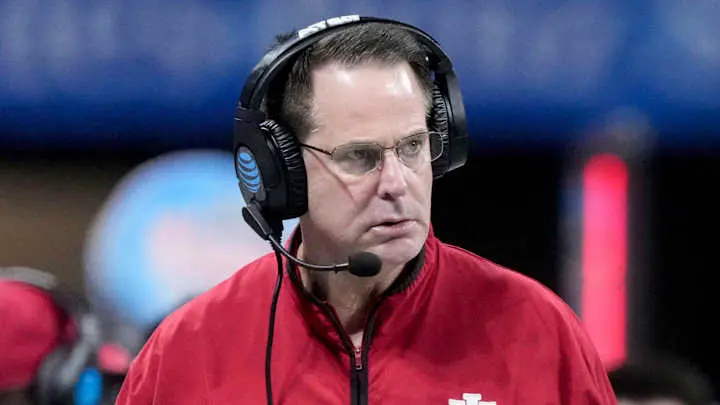
Finebaum then escalated, his voice climbing as he laid into Indiana’s program and the broader NIL landscape. He accused the Hoosiers of circumventing traditional development by using Name, Image, and Likeness money to assemble a roster capable of overwhelming a blue-blood like Oregon.
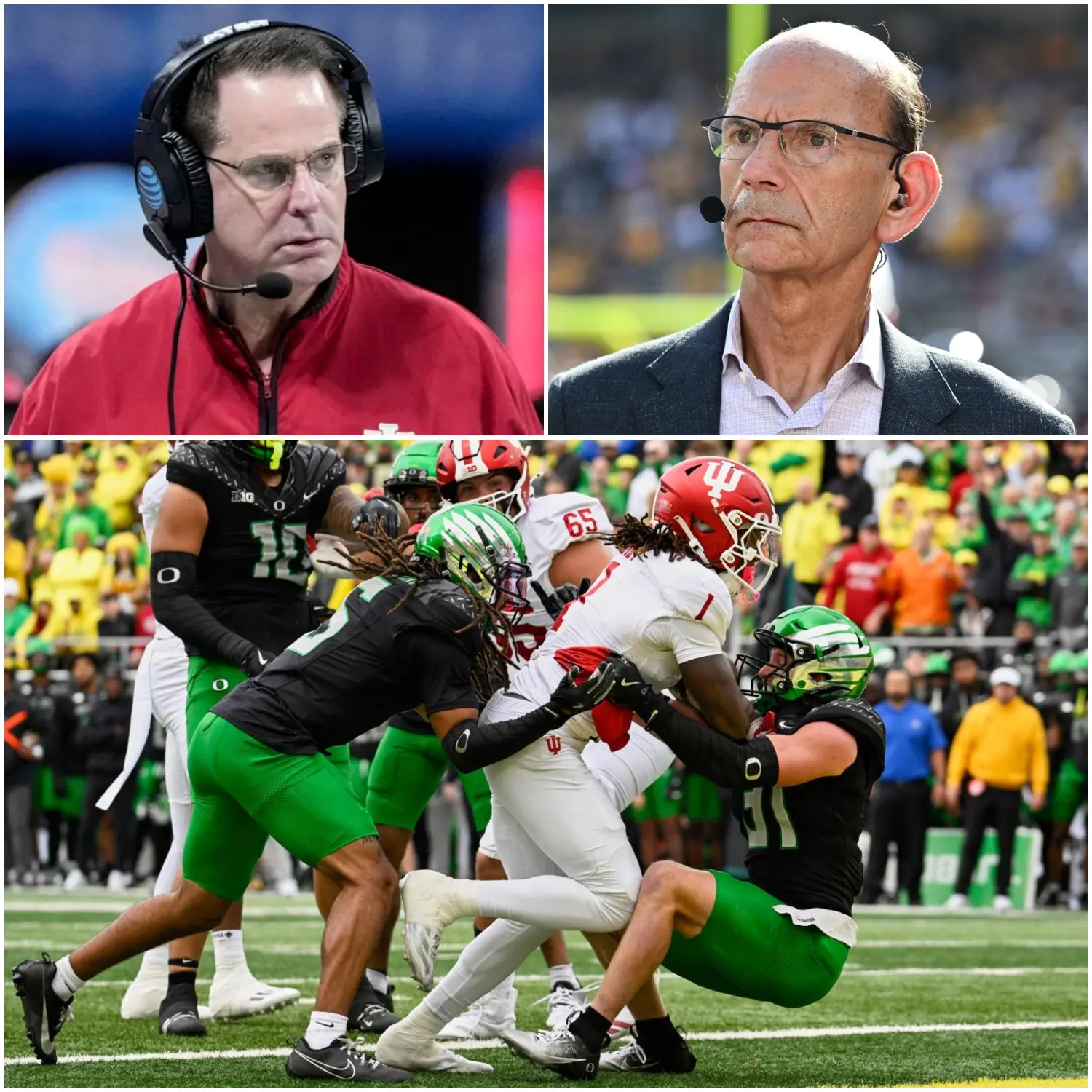
“You don’t beat a program like Oregon with development or toughness anymore — you beat them with NIL money,” he continued. “Indiana bought that win. Bought the roster. Bought the depth. And frankly, they got the benefit of a system that’s completely broken.”
The comments ignited immediate backlash across social media and college football circles. Indiana fans flooded replies with clips of the game’s biggest plays, pointing to explosive runs by quarterback Kurtis Rourke and suffocating defense led by linebacker Jaiden Hunter as proof of legitimate on-field superiority.
Oregon supporters, meanwhile, were divided. Some agreed that NIL has tilted the playing field, while others defended the Ducks, arguing that their own roster was built with similar resources and that execution, not cash, decided the outcome.
The blowout itself was historic. Indiana scored on its first seven possessions, racked up 612 total yards, and held Oregon to just 198 yards and three points through three quarters.
Rourke threw for 412 yards and five touchdowns with zero interceptions, while the Hoosiers rushed for 200 yards against a Ducks defense ranked top-ten nationally entering the game.
Finebaum’s tirade came during the post-game edition of The Paul Finebaum Show, broadcast live from the College Football Playoff site. He doubled down when challenged by co-hosts, insisting that Indiana’s rapid rise from perennial underachiever to CFP contender could not have happened without massive external investment.
“Two years ago they were 3-9,” he reminded viewers. “Now they’re dismantling Oregon in the quarterfinals. You don’t flip a program like that through coaching and recruiting alone. You do it with checks — big ones.”
He specifically called out Indiana’s aggressive NIL collective, which reportedly raised over $40 million in the 2025 calendar year. Finebaum claimed that money was funneled directly to portal acquisitions and high-profile commitments that transformed the roster overnight.
Critics of Finebaum accused him of SEC bias and sour grapes. Indiana’s win eliminated any remaining path for an SEC team to reach the national championship game, leaving the conference shut out of the semifinals for the first time in playoff history.
Supporters of the Hoosiers fired back with data: Indiana ranked 18th nationally in returning production entering 2025, had one of the top transfer classes, and benefited from outstanding coaching under Curt Cignetti. They argued that NIL merely leveled the playing field for programs outside the traditional power conferences.
Finebaum remained unapologetic. When a producer attempted to pivot to other topics, he cut in: “No, we’re not moving on yet. This is the story. The system is corrupt, and Indiana is the latest example of how money buys success.”
The rant quickly became the most-shared clip from the playoff weekend. Memes, reaction videos, and heated debates dominated X, Reddit, and TikTok. Hashtags like #FinebaumMeltdown and #NILIndiana trended nationwide within hours.
Indiana head coach Curt Cignetti addressed the comments briefly in his post-game press conference. “We played our game, executed our plan, and won convincingly,” he said. “I’m proud of these players. They earned every yard tonight.”
He declined to engage directly with Finebaum’s accusations but added, “NIL is part of college football now. Every team uses it. We just used it well.”
Oregon coach Dan Lanning, visibly frustrated after the loss, took a more measured approach. “Credit to Indiana. They were the better team tonight. We didn’t execute. That’s on us.”
Behind the scenes, sources close to the Indiana program said Finebaum’s remarks had galvanized the team. Players reportedly shared clips in group chats, turning the criticism into extra motivation for the semifinal matchup against the winner of Texas-Georgia.
Finebaum’s history of provocative commentary is well-documented. He has long criticized the changing landscape of college football, particularly the impact of NIL and the transfer portal on competitive balance.
Yet this particular outburst felt personal to many observers. By singling out Indiana—a program with no national titles and limited historical success—he drew accusations of punching down at a team finally tasting elite-level victory.
The College Football Playoff selection committee had already faced scrutiny for seeding Indiana at No. 4 despite their undefeated season. Finebaum’s comments added fuel to the narrative that the Hoosiers were undeserving interlopers in the playoff field.
As the dust settled, analysts weighed in. Some agreed that NIL has created haves and have-nots, while others pointed out that Oregon’s own roster was bolstered by significant collective funding and portal additions.
One thing was undeniable: Finebaum’s cold, deliberate delivery had turned a lopsided win into a national conversation about money, merit, and the future of college football.
Indiana now prepares for the biggest game in program history. Whether they silence the doubters or prove Finebaum right will be decided on the field in the semifinals.
For now, the loudest voice belonged to the analyst who refused to celebrate their achievement. In a sport increasingly defined by dollars, Paul Finebaum made sure everyone remembered the price tag.
The Hoosiers’ 56-22 demolition will be remembered for the scoreboard—and for the scorching words that followed. In the NIL era, victories come with asterisks for some, and asterisks don’t fade easily.